The Fed’s Balancing Act
The longer the Fed delays reaching its inflation target, the longer it will take for the American public to perceive that the ‘affordability’ problem has been resolved.

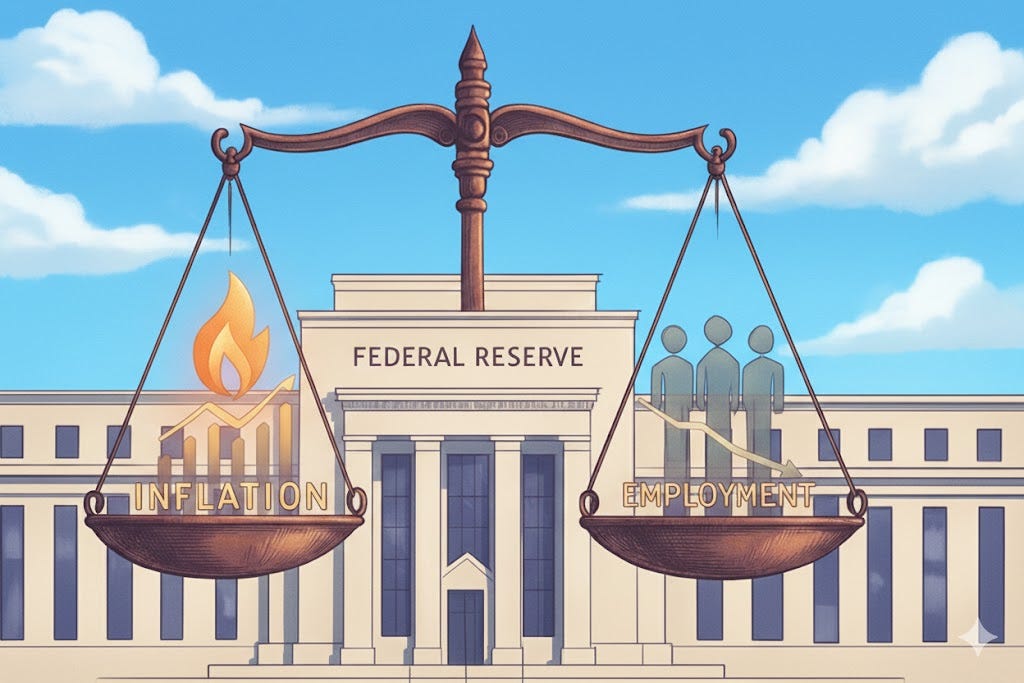
The U.S. Federal Reserve has the dual mandate of maximum employment and price stability. The Federal Open Market Committee (FOMC), which is responsible for monetary policy, has traditionally interpreted the first objective qualitatively, as the highest level of employment consistent with price stability.
By contrast, since January 2012 the FOMC has pursued a quantitative target for the second objective: an annual inflation rate of 2.0 percent, as measured by the Personal Consumption Expenditures Price Index .
The FOMC primarily relies on a single monetary policy instrument, the benchmark interest rate, which can create dilemmas when the two objectives come into conflict. The inflation surge following the Covid-19 pandemic has posed precisely such dilemmas.
In line with the practice established after the Great Inflation of the early 1980s, the FOMC began prioritizing the fight against inflation in 2022, viewing it as a prerequisite for achieving maximum employment. However, since September 2025, the Committee has shifted its priorities, showing greater concern for employment conditions.
Accordingly, for the third consecutive time, the FOMC cut the target range for the federal funds rate by a quarter of a percentage point at its December meeting. As in the two previous policy meetings, the Committee argued that downside risks to employment had increased.
While acknowledging that risks to inflation remain tilted to the upside and those to employment to the downside, Chairman Powell stated that the rate cuts implemented since September had placed monetary policy “within a range of plausible estimates of neutral.” He further noted that, under the monetary policy framework, “when the risks to the two goals become more balanced,” the appropriate response is to adopt a “more balanced” stance.
However, the Fed’s balancing act may not have been as balanced as suggested. The risk assessment relied on statistical data truncated by the federal government shutdown, which limited data collection during October and more than half of November. The resulting scarcity and unreliability of information may have led to flawed judgments. A pause would have seemed more prudent, while a quarter-percentage-point rate cut did little to mitigate employment risks.
Moreover, the data available through September presented two distinct narratives for the Fed’s objectives. The excess inflation observed since March 2021 represents the longest and most significant episode since the Great Inflation. Between November 2023 and September 2025, inflation stagnated at around 2.6 percent, while core inflation remained near 2.9 percent.
Over the same period, the unemployment rate rose by five-tenths of a percentage point, reaching a level not far from the FOMC’s “longer-run” median projection. Persistent inflation above target carries the risk of unanchoring longer-term inflation expectations, thereby reducing the effectiveness of monetary policy.
Even so, rather than addressing the inflation problem directly, the FOMC chose to focus on potential dangers to employment. Forecasting the future is inherently uncertain, and the Fed’s predictions have not been especially known for their accuracy.
In outlining future trends, Powell argued that inflationary pressures stem primarily from U.S. tariffs, noting that between May and September annual goods inflation turned positive and increased, which he expects to be a transitory phenomenon. Notably, he failed to acknowledge that over the same period services inflation stagnated at around 3.5 percent, while goods inflation averaged only 0.8 percent.
Even more relevant is the asymmetry in the Fed’s treatment of employment. The slowdown in monthly nonfarm job creation became evident in May 2025, the same month in which, according to Powell, the inflationary effects of tariffs began to appear. If the labor market is being affected by trade and immigration policies, Powell’s logic should also apply to employment, and the possibility that this unusual behavior is likewise transitory should not be dismissed.
Regardless of an irremediably uncertain future, the Fed remains indebted to its inflation target. The longer it delays achieving this goal, the longer it will take for real wages to recover to pre-pandemic levels, an apparent prerequisite for the American public to perceive that the “affordability” problem has truly been resolved.
This is an English version of a piece originally published in El Financiero on December 17, 2025.
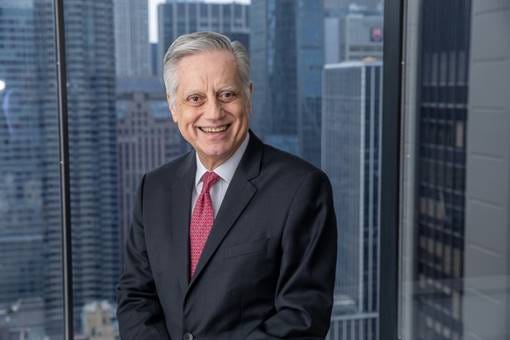
Manuel Sánchez holds a B.A. in economics from the Monterrey Institute of Technology (ITESM) and an A.M. and a Ph.D. in economics from The University of Chicago. He is a former Deputy Governor at the Bank of México, a Non-Resident Fellow at the SMU Texas-Mexico Center, a member of several boards of directors, and an Economic Advisor to Spruceview Capital Partners.